What Does a Talent Agent Do? Our Founder Explains
A talent agent finds you work, negotiates the fee and decides who to put in front of a casting team. Our founder explains how the job works in a 51-minute interview.
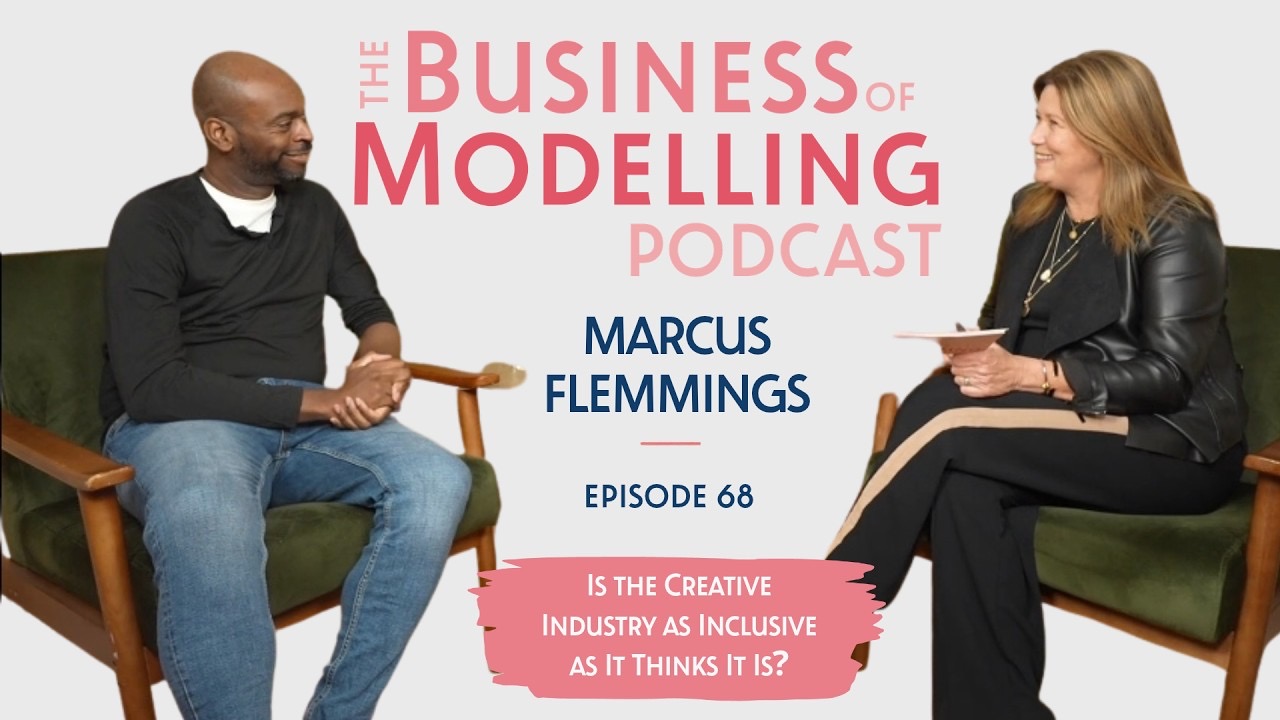
- A talent agent represents performers. They submit you for roles, negotiate fees and usage, and manage the booking from first enquiry to payment.
- Marcus Flemmings, founder of Allied Artists and The Diversity Agency, explains the job on episode 68 of The Business of Modelling podcast, hosted by Tessa Dewing. The interview runs 51 minutes and was published on 2 November 2026.
- He signs on personality before look, and tells new talent to spend their first months learning.
- On diverse casting, he says representation in front of the camera has improved and behind it has barely moved.
- He wants options to carry a fee, and minimum working standards for models and actors.
What does a talent agent do?
A talent agent represents actors, models and other performers. The agent reads casting breakdowns, submits the right people, negotiates the fee and the usage, checks the contract and chases the payment. The performer does the audition and the job. The agent earns commission on the work they book, which our guide to what an acting agent costs sets out.
Marcus puts it in one line in the interview: my job is to get people work.
He has done that job since the late 2000s, first for models and now for actors as well. In the video above he talks through each part of it. We have pulled out the sections that matter most to actors and to the people who cast them.
Talent agent, acting agent, model agent: who does what
People use the three titles for the same job in different parts of the industry. The work differs enough that Marcus runs each as its own company.
| Agent | Represents | Typical work | In our group |
|---|---|---|---|
| Acting agent | Actors | Film, television, stage and commercials | Allied Artists |
| Model agent | Models | Commercial, fashion and e-commerce shoots | The Diversity Agency, a London model agency |
| Specialist agent | Hand, foot and fit models | Product, beauty and fitting work | Hands by TDA |
Talent agent is the term that covers all three. If you are an actor looking for representation, start with how to get an acting agent and casting agency versus talent agency.
The Diversity Agency has its own write-up of this interview from the modelling side: what a model agent does.
What the interview covers
Each time opens the video on YouTube at that point.
- 1:46 Growing up in north-west London, wanting to make films, and six years in finance
- 8:41 Founding BAME Models in 2016 and why it became The Diversity Agency
- 13:01 How casting briefs talk about ethnicity, and where they have improved
- 17:18 Why Allied Artists was set up as a separate acting agency
- 19:48 What makes talent stand out: personality before look
- 23:48 What new models and actors misunderstand about a career
- 25:35 Fees, usage and the trouble with being paid only if featured
- 30:06 Sending scripts to Hollywood studios at 17, and his feature The Model
- 34:33 Family, culture and diversity that is only for show
- 40:37 Models who act and actors who create
- 43:11 What still needs to change for models, actors and agents
Why Allied Artists is its own agency
Acting work used to be handled inside the model agency. Marcus says that held actors back, because casting teams saw the agency name and filed every suggestion under commercial work. So he set up a separate company with a separate name, built for film, television and stage.
He is honest that it was the harder route. A new agency means winning clients again and getting onto Spotlight again, while still running the first business. He says it took a long time to get off the ground and that persistence is what carried it. Allied Artists now has its own roster and its own clients. If you are weighing up representation, our guides to getting an acting agent and artist management versus an acting agent cover the practical side.
How a talent agent decides who to sign
Asked what makes someone stand out, Marcus is direct: I always go for personality over look.
His reasoning is practical. An agent's job is to get people work, and an agent who has a difficult time with a performer will think twice before putting that performer in front of a client. In a crowded market, the person who is easy to work with gets the next suggestion.
He makes the same point about effort. Talent and looks do not guarantee anything. The people who last are the ones who turn up early, listen and keep learning. Our piece on what makes a good actor goes further into this.
Your currency is learning.
What agents want new talent to know
That line is his advice to anyone new, whether they are 18 or 55. In the first months the things worth chasing are pictures, test shoots and an understanding of how the industry works. Money comes later.
He also describes the part newcomers find hardest. You cannot choose your working days, bookings land at short notice, and self-tapes are asked for with very little warning. Going through the agency's records, he had seen people send around 300 self-tapes in a year and book two jobs. He calls that persistence admirable. If you are at that stage, start with how to do a self-tape.
Diverse casting: what has changed
Marcus founded BAME Models in 2016, which later became The Diversity Agency, so diverse casting has been his daily work for a decade. He gives a plain account of where it stands.
- Demand for diverse casting peaked between 2020 and 2022. He still sees diverse briefs, in smaller numbers than at that peak.
- Commercial advertising represents the public better than fashion does.
- Briefs use better language than they did. Some still ask for an "African-American" performer in the UK when they mean a Black one.
- In front of the camera, representation is far better than when he started. Behind the camera, he says, very little has changed.
He separates diverse casting from casting to a checklist. He has no interest in a cast assembled to tick boxes, or in a post made because every other brand made one. Colour-blind casting, where a team fills a role without regard to ethnicity, is a different route to a similar aim. Both start with a brief that says what it means. For the booking side, read how to cast actors for a commercial and our guide to Black British actors.
Fees, options and what should change
The last third of the interview is about money and fairness. Marcus says buyout fees have fallen a long way while the brands paying them are still making their money. He objects to offers where the usage fee is only paid if the performer ends up featured in the final cut.
His proposals are specific. A performer held on an option should receive a small fee for being held. There should be minimum rates at the bottom of the market. And there should be a neutral place where models and actors can get advice and support, including after a difficult shoot. For how fees work on the acting side, see how much actors get paid in the UK.
The filmmaker
Marcus calls himself a filmmaker first. Through London New Wave he made White Guilt, which was nominated for Best Feature and Best Actress at Raindance 2025 and won Best Feature at BUFF. In the interview he talks about The Model, which won Best British Asian Film at the UK Asian Film Festival 2026. He explains why he is keeping his films off the streaming platforms for now and releasing them through his own cinema screenings.
One founder, four companies
The interview touches every part of the group. Here is where each one lives.
- The Diversity Agency is the London model agency Marcus founded in 2016, for commercial, fashion and e-commerce bookings.
- Faces by TDA is its fashion and editorial board.
- Hands by TDA represents hand, foot and body-part models.
- London New Wave is the film company.
Quick answers
What does a talent agent do?
A talent agent represents performers. They submit you for roles, negotiate fees and usage, check contracts and collect payment, and they earn commission on the work they book.
Is a talent agent the same as an acting agent?
An acting agent is a talent agent who represents actors. Talent agent is the wider term and also covers model agents.
What do talent agents look for?
Marcus Flemmings says he signs on personality before look. He wants people who are reliable, easy to work with and willing to learn, because an agent has to trust you in front of a client.
What is diverse casting?
Diverse casting sets out to represent the audience a production or campaign is made for. It differs from colour-blind casting, which fills a role without regard to ethnicity.
How do I get a talent agent?
Build a Spotlight profile, a showreel and current headshots, then approach agencies whose roster has room for your casting type.
Watch or listen
The episode is on YouTube and on Apple Podcasts. To talk to us about representation or a casting, get in touch with Allied Artists.